forkflow turns a space of defensible analytic choices
into a single reproducible object. This vignette runs a small multiverse
on the colon cancer trial that ships with the
survival package, so it needs no download.
2. Enumerate the decision space
Every subset of the candidate adjusters is one defensible adjustment set.
specs <- adjuster_sets(
  c("age", "sex", "obstruct", "perfor", "adhere", "differ", "surg")
)
nrow(specs)   # 2^7 = 128 specifications
#> [1] 128
3. Fit the whole grid
results <- fit_multiverse(specs, function(spec) {
  f <- reformulate(c("node4", spec$adjusters[[1]]), "Surv(time, status)")
  coxph(f, data = d) |>
    tidy(conf.int = TRUE) |>
    dplyr::filter(term == "node4")
})
4. Summarise the vibration of effects
voe(results)
#> <vibration of effects>
#>   models             : 128
#>   median effect      : 2.630
#>   relative ratio     : 1.07   (p99 / p01)
#>   Janus fraction     : 1.00   (0 or 1 = stable sign)
#>   prop. significant  : 1.00
5. Visualise
spec_curve(results)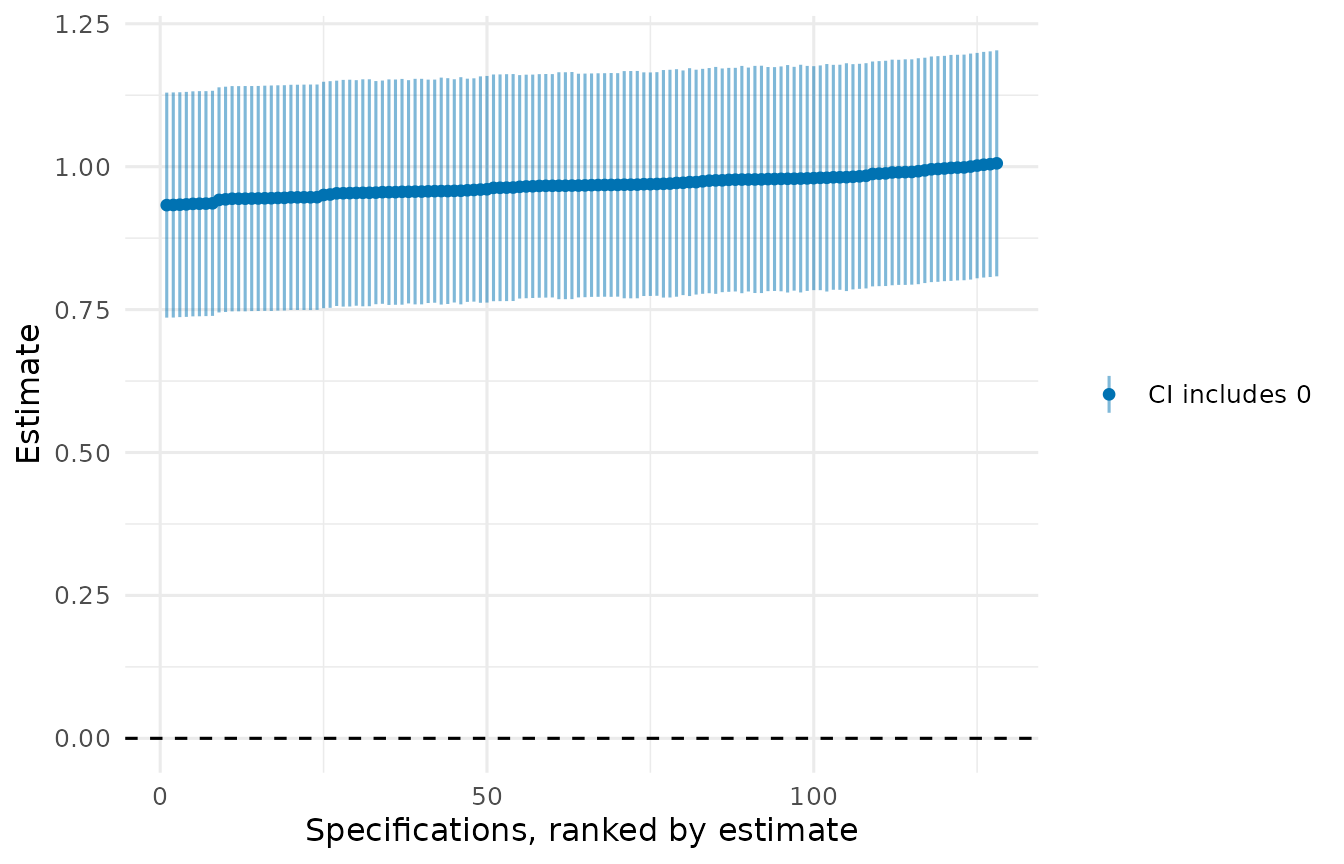
voe_volcano(results, colour = n_adjusters)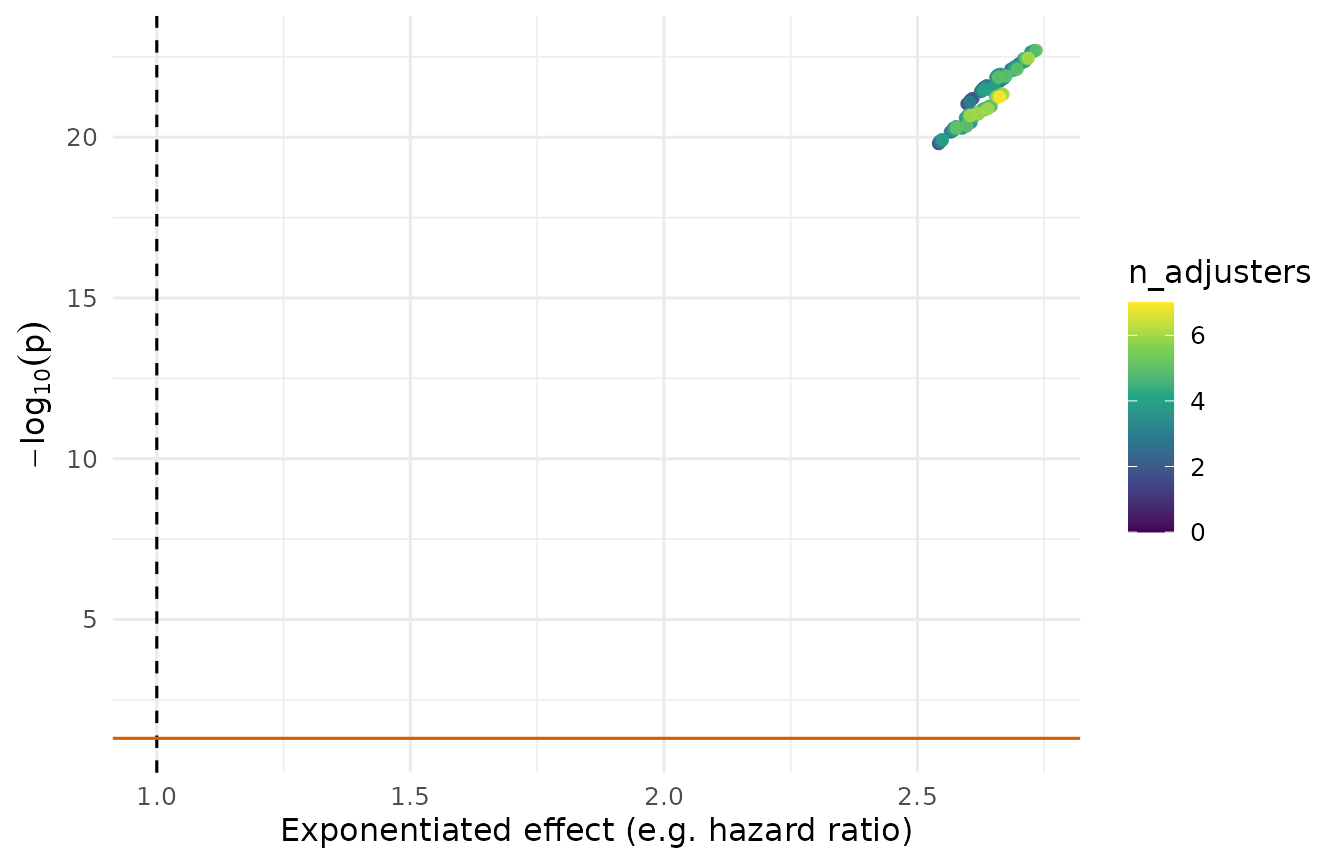
The relative ratio and the Janus fraction quantify how much the
association for node4 depends on which covariates enter the
model.